Skip to content
(719) 745-8080

Commercial · Ice machines

Commercial Ice Machine Repair in Denver

Grizzly Appliance Repair fixes commercial ice machines for restaurants, bars, coffee shops, hotels and offices across the Denver metro: modular cubers, undercounter units and nugget machines from Hoshizaki, Manitowoc, Scotsman, Ice-O-Matic and Follett. The diagnostic is from $129, credited toward the repair.

  • From $129diagnostic, credited
  • Quote firstbefore any work
  • EPA 608certified technicians

When the ice stops, the whole service slows down

A bar without ice cannot pour half its menu. A restaurant without it buys bagged ice by the case, and a hotel hears about it from guests by the second floor. Most ice machine failures are not dramatic: a valve sticks, a pump wears out, a sensor gets coated with scale and the machine shuts itself down to protect the compressor. Found early, they are usually one-visit repairs.

Our technicians work on ice machines every week, alongside the walk-ins, reach-ins and dishwashers in the same kitchens. We diagnose by watching the machine run through a full cycle and reading what its control board reports, then we quote the repair before touching anything.

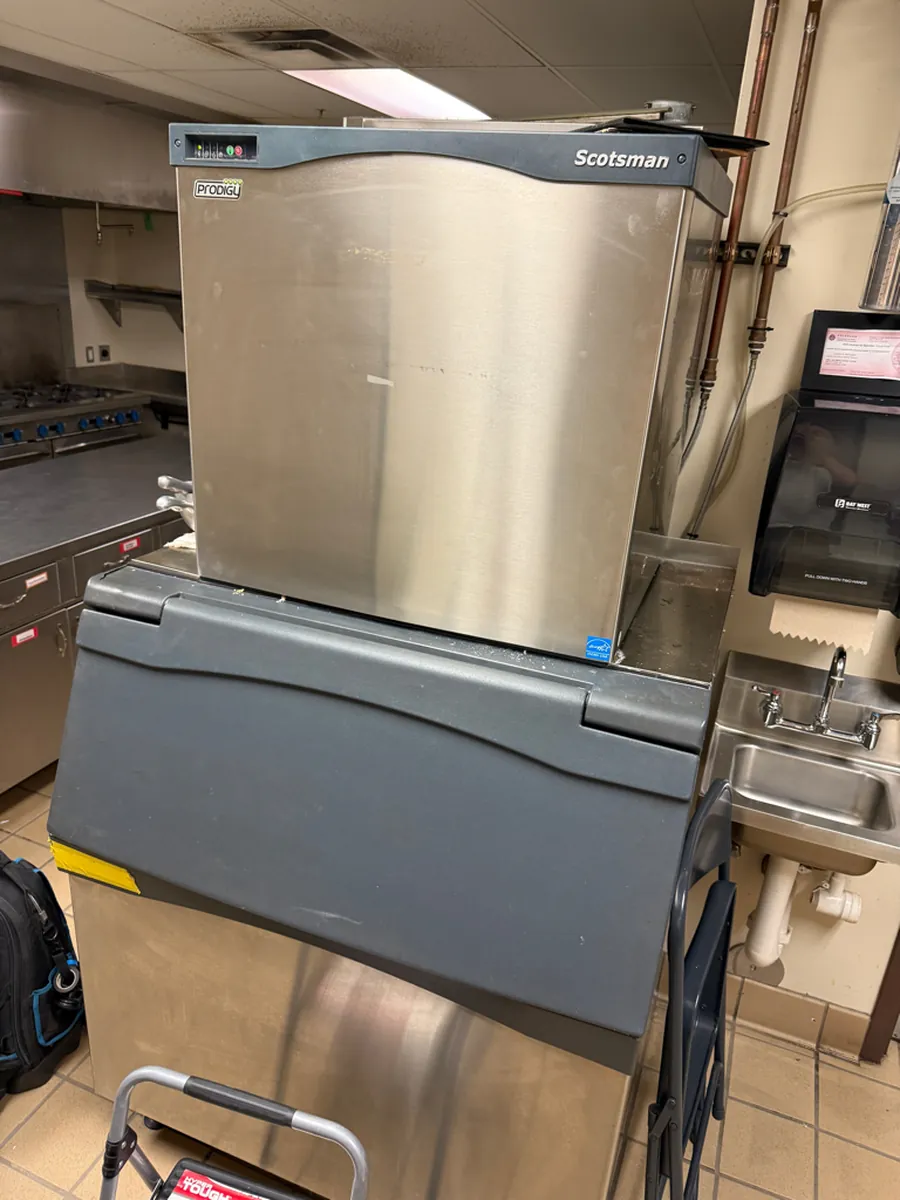
Scotsman modular ice machine on a bin in a school kitchen in Parker
A Scotsman cuber on its bin in a Parker school kitchen.

Ice machines we repair

  • Modular cubers (ice heads on a storage bin or dispenser): the workhorses of restaurants and bars, air-, water- or remote-cooled.
  • Undercounter cubers: self-contained units behind bars and in coffee shops, where heat and tight spaces cause most of the trouble.
  • Nugget and flake machines: popular in healthcare, offices and drive-thru beverage stations, with their own auger, gearmotor and bearing wear.
  • Ice and water dispensers: countertop and lobby units in hotels, clinics and break rooms.

Brands we see most: Hoshizaki, Manitowoc, Scotsman, Ice-O-Matic and Follett. We are an independent company, not a factory-authorized servicer.

Symptoms

Common ice machine problems, and what we do about them

The machine is not making any ice

Usual causes. Start with the simple checks: is it powered, is the toggle switch on "ice" and not "clean" or "off", is the water supply valve open? If all three are fine, the usual culprits are a water inlet valve that no longer opens, a failed water pump, a float switch stuck by scale, a bin control that thinks the bin is full, or a condenser so clogged that the unit trips on high pressure.

What we do. We read the board's status lights or codes first, then watch one full cycle: water fill, freeze, harvest. That tells us which part of the cycle breaks down, so the fix targets the actual failure instead of guessing at parts.

Low production or small, thin cubes

Usual causes. Scale on the evaporator, a partially blocked water distribution tube, a dirty air-cooled condenser, a weak condenser fan motor, low water pressure from a loaded filter, or a thickness probe set or coated wrong. In a hot kitchen the room itself can be the problem: an air-cooled machine pushed against a wall or next to a fryer line can lose a large share of its rated output.

What we do. We check incoming water flow, clean or descale where it is needed, measure condenser airflow and temperatures, and set the ice thickness to the manufacturer's spec.

Long harvest or ice stuck on the evaporator

Usual causes. The sheet of ice should release in a minute or two. When it does not, look at a failed hot gas valve, a harvest assist motor or pin, a bad harvest sensor, or heavy scale that grips the cubes. Repeated long harvests are what trigger many harvest-timer alarms.

What we do. We time the harvest, check the hot gas valve and the harvest-assist parts, and descale the evaporator if mineral buildup is holding the ice.

Beeping, flashing lights or an error code

Usual causes. Modern cubers stop themselves and report why: freeze time too long, harvest time too long, high condenser temperature, low water, low or high voltage. A reset can make the machine run again for a day, but the code is telling you something is drifting.

What we do. We look up the code against the board, find the condition that caused it and fix that, so you are not resetting the machine every morning. See our Hoshizaki and Manitowoc code guides.

Water on the floor

Usual causes. A cracked water trough, a split distribution tube, a loose drain line, a blocked bin drain, or a drain that does not have the correct air gap and backs up. Bin drains that clog with slime are common in machines that have not been cleaned for a while.

What we do. We trace the leak to its source, clear and re-route drain lines where needed and make sure the drain has a proper air gap so it cannot back up into the bin.

Cloudy, soft or bad-tasting ice

Usual causes. Usually a sign of slime and mineral buildup in the water system, an overdue filter cartridge, or a machine that is not completing a full freeze. Pink or black film on the curtain, the trough or inside the bin is biofilm and needs a proper cleaning and sanitizing, not a rinse.

What we do. We clean and descale with the manufacturer's approved chemicals, sanitize every surface the water and ice touch, replace the filter and set a cleaning schedule that fits how hard the machine works.
From our job log

Ice machine jobs from around the metro

A few recent ice machine calls, written up from our technicians' notes. Photos are from the jobs themselves.

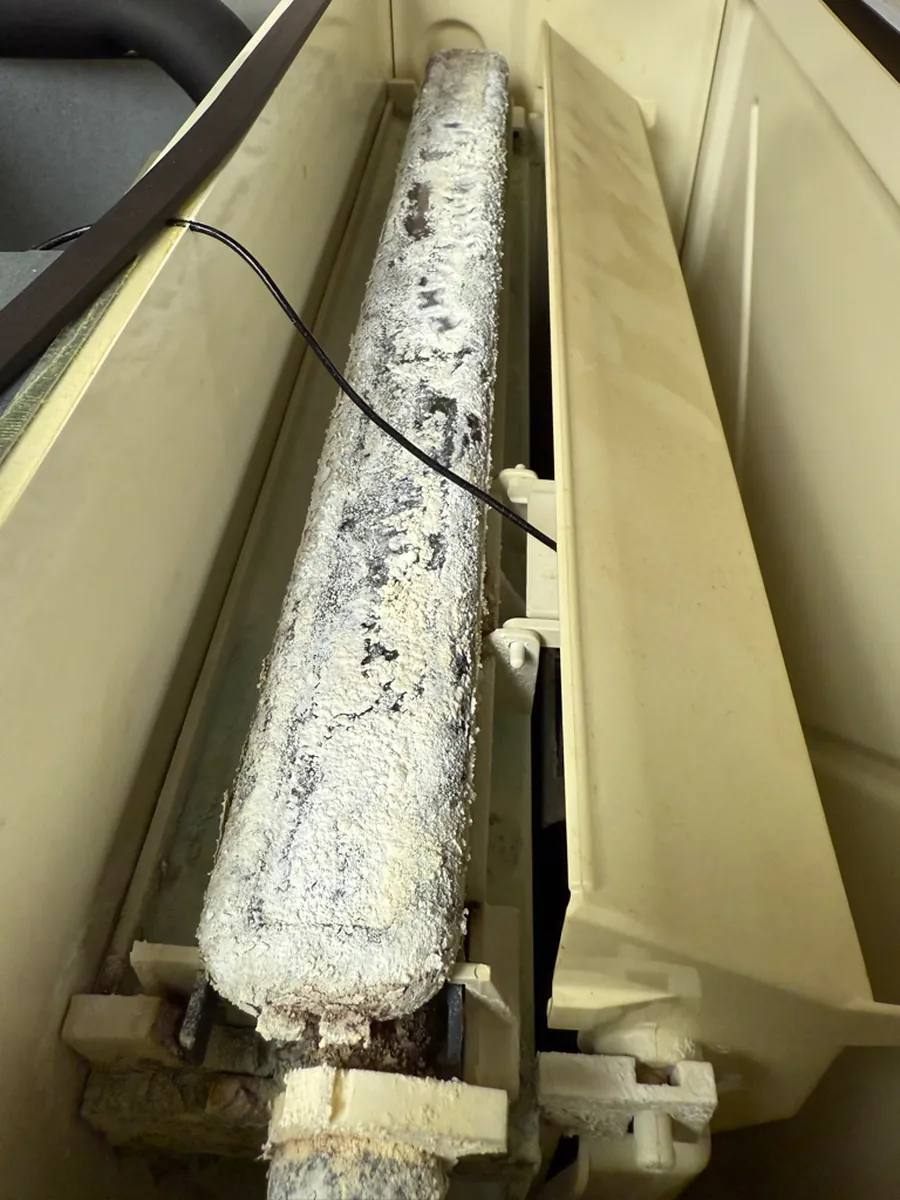
Water distribution tube of a Scotsman ice machine covered in white mineral scale
Scale on the water distribution tube of the Parker school's Scotsman cuber.

Parker · School kitchen

Scotsman cuber making no ice

What we found. The machine was running but not producing. Inside, the water distribution tube and the evaporator were coated in thick mineral scale, enough to block the water flow over the freezing plate.

What we did. Diagnosed the machine on site and documented the scale so the school could see exactly what was stopping production and why a full descale and filter service comes before any parts.

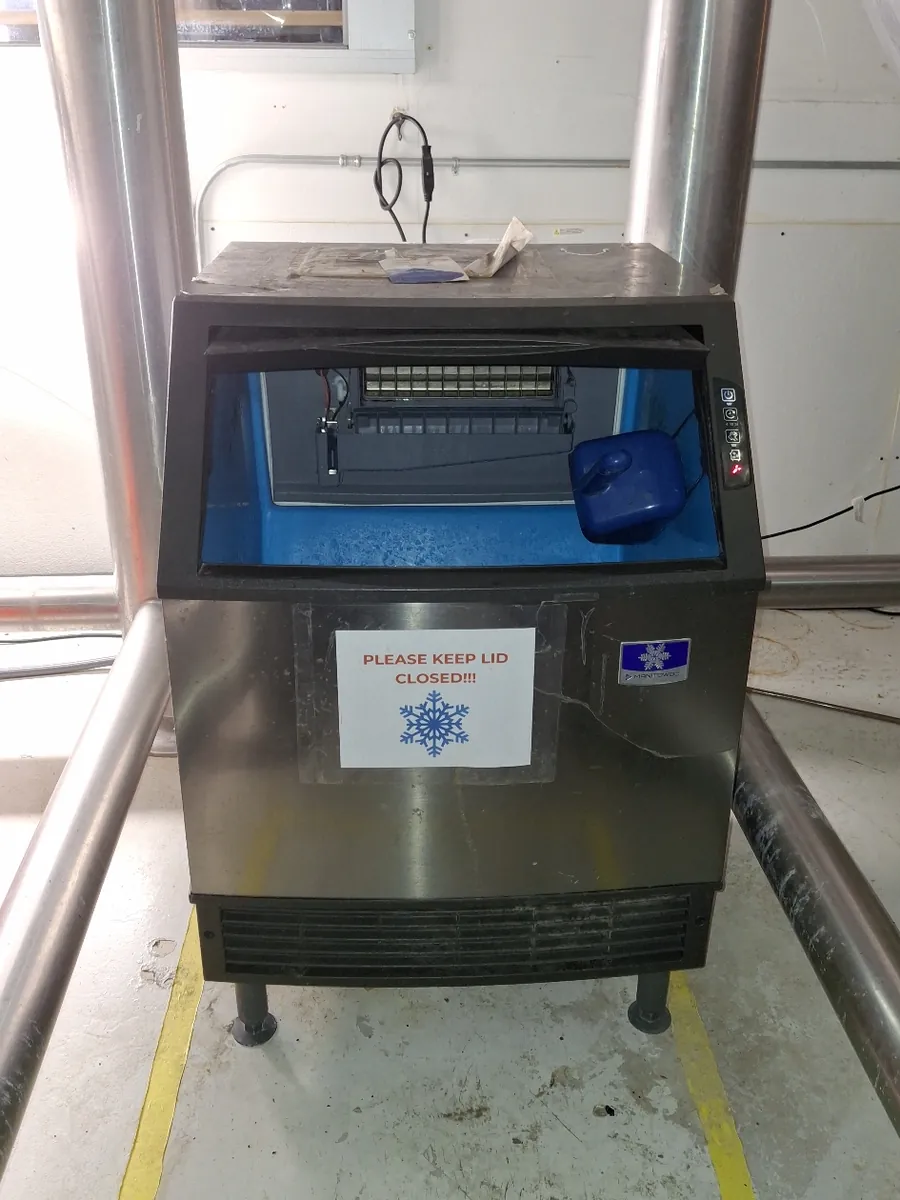
Manitowoc undercounter ice machine with its lid open in a Boulder commercial space
The Manitowoc undercounter in Boulder after the sealed-system repair.

Boulder

Manitowoc undercounter that kept shutting off

What we found. The machine would start and then shut itself down within minutes. A pressure sensor on the sealed system had failed, so the control board could not read system pressure and stopped the machine to protect the compressor.

What we did. Recovered all the refrigerant, brazed in a new pressure sensor, pressure-tested the system with nitrogen, pulled a vacuum and recharged it by the factory weight. Then ran it through full cycles to confirm it stayed on and made ice.

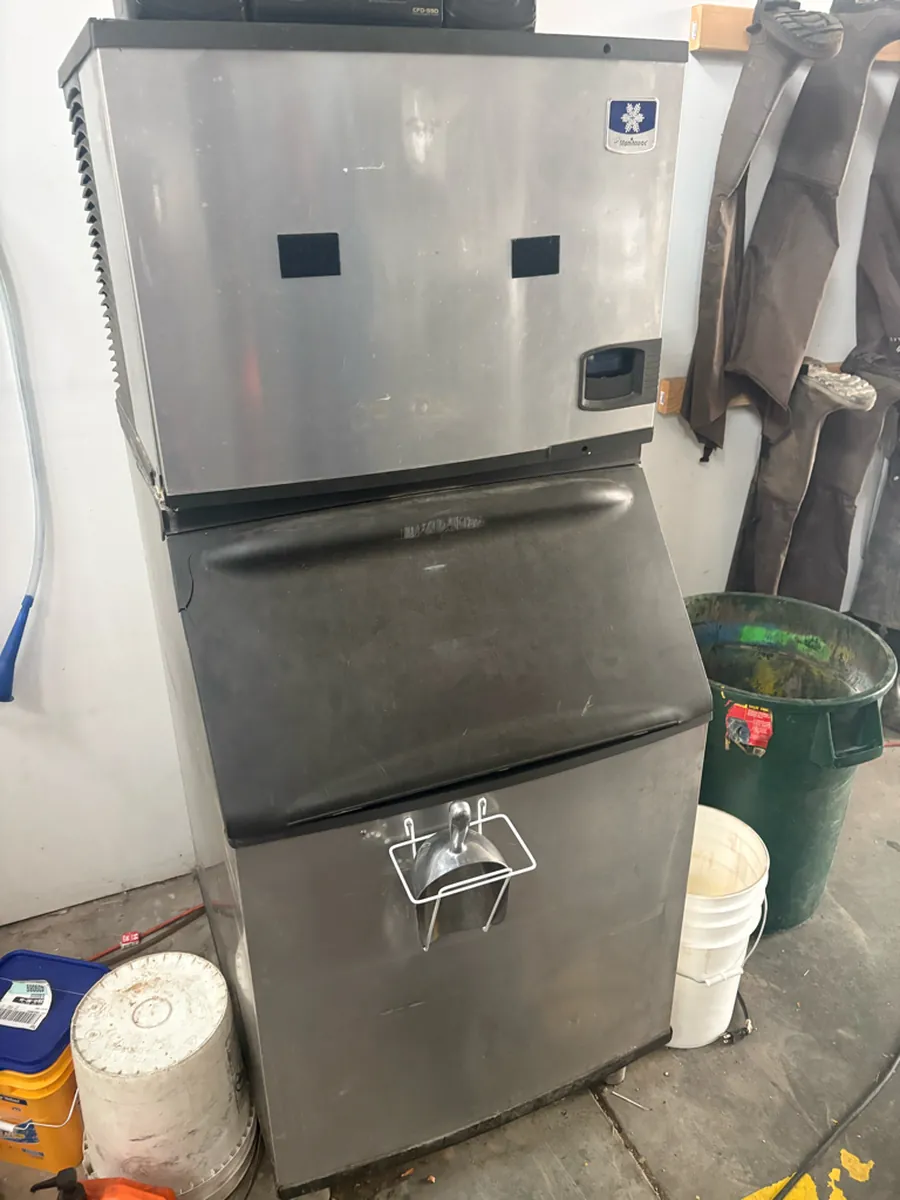
Manitowoc modular ice machine on a storage bin in a commercial back room in Arvada
The Arvada Manitowoc cuber on its bin.

Arvada

Manitowoc cuber with no water coming in

What we found. The machine was running but no water was reaching the trough, so it had nothing to freeze. The water inlet valve had stopped opening.

What we did. Replaced the water inlet valve, checked the fill and the water level, and watched it through a freeze and harvest cycle.

Boulder

Manitowoc cuber with failing sensors

What we found. Production had dropped and the machine was stopping between cycles. The water flow sensors, the ice thickness sensor and a thermistor were giving the control board bad readings.

What we did. Replaced the flow sensors, the ice thickness sensor and the thermistor, then cleaned the machine and ran it through full freeze and harvest cycles to confirm it was holding production.

Arvada

Ice-O-Matic slowed down by scale

What we found. Production was falling off. The evaporator was coated with calcium deposits and the condenser was loaded with dust, so the machine could neither freeze nor shed heat properly.

What we did. Cleaned the condenser and the evaporator, ran the machine's cleaning cycle with a descaling solution to dissolve the calcium buildup, sanitized it and checked production afterwards.

Prevention

Cleaning, descaling and the water going in

Most ice machine breakdowns we see trace back to two things: what is in the water, and how long it has been since the machine was cleaned. Minerals in the supply water come out of solution on the coldest surface in the building, which is the evaporator. Scale makes harvest slower, cubes thinner and sensors less accurate. Biofilm grows in the trough, the distribution tube and the bin, and it is the first thing a health inspector's flashlight finds.

What a proper cleaning includes

  • Harvesting off and discarding all the ice, and emptying the bin.
  • Running the machine's clean cycle with the manufacturer-approved descaler, then sanitizing with an approved sanitizer.
  • Removing and hand-cleaning the parts that hold slime: curtains, water trough, distribution tube, float and sensors.
  • Cleaning the bin, the bin drain and the door gasket.
  • Cleaning the condenser so the machine can reject heat, and checking the fan.
  • Replacing the water filter cartridge and noting the date on it.

How often

Manufacturers generally call for cleaning and sanitizing at least twice a year. Busy bars, bakeries, breweries and coffee shops often need it every three to four months, because yeast and flour in the air feed the slime. Water quality across the Denver metro depends on your provider and whether you are on surface water or wells, so the right interval for your machine depends on what we find inside it the first time.

Where the machine sits matters

Air-cooled ice machines need cool air in and room for hot air out. In a lot of Denver kitchens the ice machine ends up next to the cook line or tucked into a closet with no ventilation. That raises condenser pressure, cuts production and shortens compressor life. If your machine lives somewhere hot, we will tell you, and we will suggest what would help, from clearances and baffles to a remote condenser on bigger installs.

By brand

What we see on each ice machine brand

Every manufacturer builds its machines a little differently, and each has its own habits once it has run a few years in a busy kitchen.

Hoshizaki

Known for crescent cubes and stainless evaporators that hold up well. The control board reports faults with beep patterns, and a freeze-timer or harvest-timer alarm usually points to water flow, scale or a dirty condenser rather than a dead board. Water pumps and float switches are the wear parts we replace most. Code meanings are in our Hoshizaki code guide.

Manitowoc

Newer Indigo models show diagnostics on the front display and log their recent faults, which makes diagnosis faster. The ice thickness probe, water level probe and flow sensors are sensitive to scale, so a machine that "acts up" is often a machine that needs a cleaning and a sensor or two. Older units without the display rely on lights and a reading of the cycle. See the Manitowoc code guide.

Scotsman

Prodigy-series cubers use indicator lights to flag water, harvest and service conditions. The water distribution tube and the sump are where scale builds first, and once the tube is coated, water no longer sheets evenly over the plate and production drops. Curtain switches and water level sensors round out the usual list.

Ice-O-Matic

Common behind bars and in smaller kitchens. Most of what we fix is the water side, including pumps, inlet valves and the water curtain or bin switch that tells the machine the bin is full, plus condensers clogged by lint and grease in tight spaces.

Follett

Nugget-ice machines and dispensers, common in healthcare and offices. They make ice with an auger rather than a freezing plate, so the wear items are different: the auger, bearings, seals and the gearmotor. A grinding noise or ice that comes out wet and slushy is the early sign.

Undercounter units of any brand

Self-contained machines live in hot, cramped spots under bar tops and coffee counters. Most of their trouble comes from heat: a front grille blocked by boxes, a condenser packed with dust, a drain that cannot fall freely. We check the installation as well as the part.

Before you call

Five checks that take two minutes

Some calls end before we arrive. Before you book, it is worth checking these:

  1. Power and switch position. Make sure the machine is plugged in, the breaker is on, and the selector is set to make ice, not to clean or off.
  2. Water supply. Is the shutoff valve open? Was there plumbing work nearby recently? A closed valve or a kinked line stops production entirely.
  3. Water filter. If the cartridge is more than six months old or the pressure gauge on the filter head reads low, a loaded filter can starve the machine of water.
  4. Air around the machine. Clear anything stacked against the grilles. An air-cooled machine needs room to breathe.
  5. The display or lights. Write down any code, light pattern or number of beeps. It saves time on the diagnosis.

If none of that helps, call (719) 745-8080. Tell us the brand, what the machine is doing and what the display shows, and we will bring the parts that most often cause that problem.

Health inspections and your ice machine

Ice is treated as food, so inspectors look inside ice machines and bins. The usual findings are slime on the curtain or in the bin, a scoop stored inside the ice, a drain without a proper air gap, and residue on the deflector above the ice. A cleaning and sanitizing service before your inspection window, plus a scoop holder outside the bin and a correct drain, takes care of most of them.

Is your machine the right size?

Ice machines are rated by how much ice they make in 24 hours under test conditions, usually 70°F air and 50°F water. A Denver kitchen in July is hotter than that, and the rated number drops in real conditions. If your machine runs non-stop and the bin is still empty by the dinner rush, it may simply be too small for the business. As a rough guide, restaurants often plan around 1.5 pounds of ice per customer, and bars around 3 pounds per seat. Tell us your volume and we will tell you whether repair or a larger head makes more sense.

Pricing

What an ice machine repair costs

One diagnostic fee, credited to the repair. The full price in writing before any work starts.

Ice machine repairs range from a quick valve or sensor change to sealed-system work, so we price each job after the diagnosis instead of quoting blind on the phone. If the machine is not worth repairing, we will say so and show you why.

How we price repairs · Warranty

Commercial diagnostic

from $129

Credited toward the repair

Repair or replace

Should you repair the ice machine or replace it?

Most failures are worth repairing: water valves, pumps, float switches, thickness probes, harvest sensors, fan motors and control boards are all reasonable repairs at any age. The decision gets harder in three cases:

  • Compressor failure on an older unit. On a machine past ten years, compare the price of a compressor replacement with a new head of the right size.
  • A leaking or corroded evaporator. Evaporators are expensive and the labor is heavy. Age decides it.
  • The machine is too small for the business. If it runs non-stop and you still run out by dinner, no repair fixes that. We can tell you what production you actually need.

Sealed-system repairs follow one procedure: find the leak, pressure-test with nitrogen, pull a vacuum and charge by the factory weight. Our technicians are EPA 608 certified.

FAQ

Ice machine questions

Ask us anything on the phone at (719) 745-8080.

How fast can you get to a down ice machine?

When food or drink service depends on it, we try to get there the same day or the next morning. Tell us it is a commercial call when you book, and give us the brand and what the display shows if you can.

How much does an ice machine service call cost?

The commercial diagnostic is from $129 and it is credited toward the repair. After the diagnosis you get the full repair price in writing before we start any work.

Which ice machine brands do you repair?

Hoshizaki, Manitowoc, Scotsman, Ice-O-Matic and Follett are the ones we see most, plus the ice side of other commercial equipment. We are an independent company, not a factory-authorized servicer.

How often should a commercial ice machine be cleaned?

Manufacturers generally call for cleaning and sanitizing at least every six months. Bakeries, breweries, coffee shops and kitchens with flour or yeast in the air usually need it more often, and so do machines on hard water without good filtration.

Is it worth repairing an older ice machine?

Pumps, valves, sensors, fan motors and control boards are all reasonable repairs on almost any machine. When the compressor or the evaporator fails on a unit that is past ten years old, it is worth comparing the repair price against a new head. We give you both numbers so you can decide.

Do you also repair the walk-in or reach-ins in the same kitchen?

Yes. We service walk-in coolers and freezers, reach-ins and prep tables and commercial dishwashers, so one visit can cover more than one unit.

Related

Other commercial equipment we repair

Call now