Skip to content
(719) 745-8080

Commercial · Walk-ins

Walk-In Cooler & Freezer Repair in Denver

Grizzly Appliance Repair fixes walk-in coolers and freezers for restaurants, convenience stores, schools, community kitchens and grocers across the Denver metro, from the evaporator inside the box to the condensing unit on the roof. The commercial diagnostic is from $129, credited toward the repair.

  • From $129diagnostic, credited
  • Rooftop unitsserviced on the roof
  • EPA 608refrigerant certified

A warm walk-in is a countdown

Everything in a walk-in is product you have already paid for. When the box drifts above 41°F, the clock starts on what you can keep, and in a busy kitchen it is hard to notice until the line cook says the chicken feels warm. Most walk-in failures give a warning first: an afternoon temperature creep, frost on the coil, a puddle under the evaporator, a condensing unit that sounds different. Called in at that point, the repair is usually smaller and the product is usually saved.

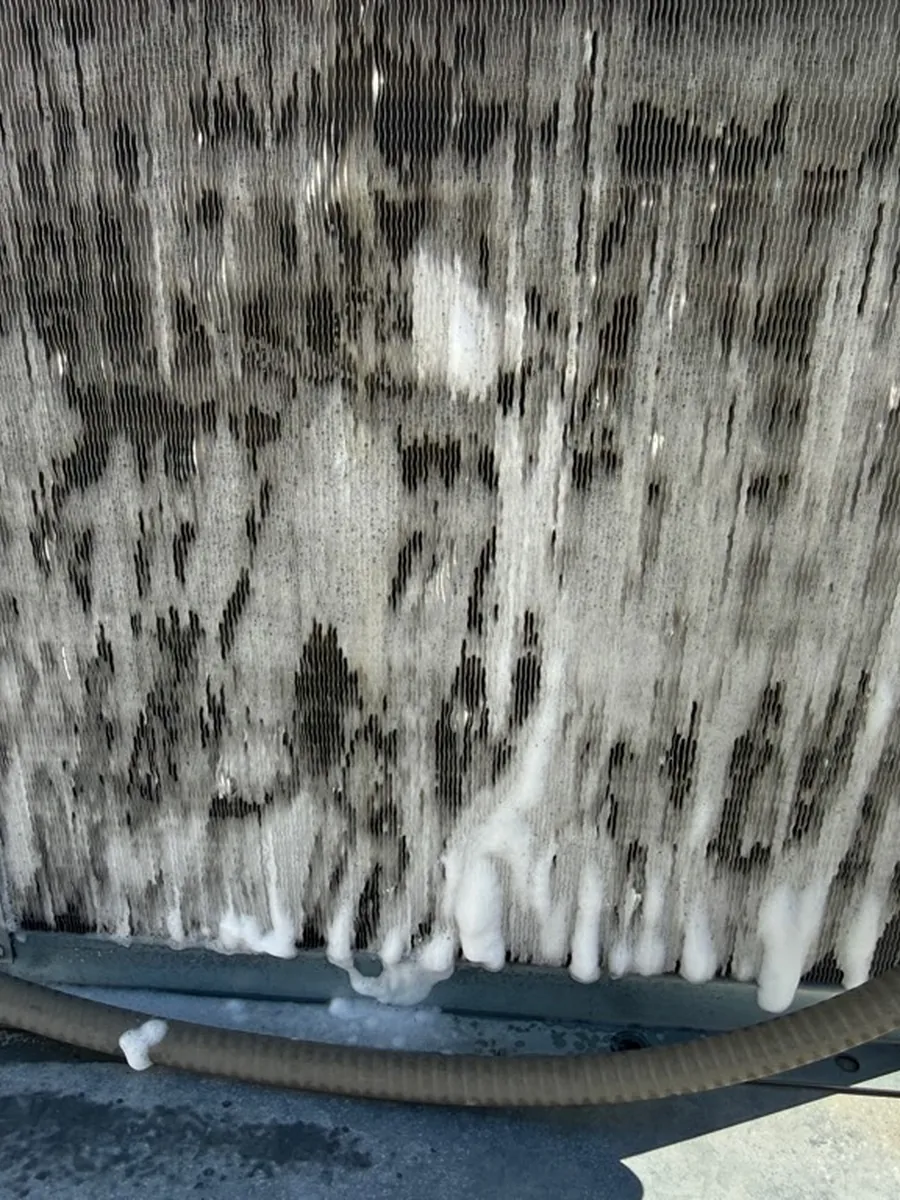
Walk-in condenser coil covered in grease and dirt during degreasing on a restaurant roof
A restaurant's walk-in condenser coil in Commerce City during degreasing.

Walk-ins we service

  • Walk-in coolers for produce, dairy, meat and beverages, including beer caves and cooler-door merchandisers in convenience stores.
  • Walk-in freezers, with their extra parts: defrost heaters, drain line heaters, door frame heaters and pressure relief ports.
  • Combination boxes, where a freezer opens off a cooler and both share a structure.
  • Remote systems with the condensing unit on the roof, on a pad outside or in a mechanical room.
  • Self-contained and top-mount systems, where the whole refrigeration package sits on top of or in the wall of the box.

We work on boxes and refrigeration systems from the common walk-in manufacturers, including the evaporators and condensing units that come with them. We are an independent company, not a factory-authorized servicer.

Symptoms

Walk-in problems we fix, and how

The box is warm and the unit is running

Usual causes. The most common walk-in call. Usual causes: a dirty condenser coil, a failed condenser fan, an evaporator coil buried in ice, an evaporator fan motor that has stopped, a refrigerant leak, or a compressor that is running but no longer pumping. A door that does not close fully can look exactly the same.

What we do. We take box, coil and air temperatures, check both fans, read pressures and amperage, and look at the door before we look at the sealed system. That order finds the cheap problems first.
Ice on the evaporator coil

Usual causes. On freezers this means defrost is not working: a failed defrost heater, a defrost timer or controller fault, or a termination switch that ends defrost too early. On coolers it usually means warm, moist air is getting in through a bad gasket or a door left open, or the evaporator fan has stopped.

What we do. We melt the coil down safely, test each heater and the defrost control, check the door seal and closer, and make sure the drain can carry the meltwater away.

Water or ice on the floor

Usual causes. A clogged or frozen drain line, a drain line heater that has failed on a freezer, a cracked drain pan, or a coil that has iced up and is dripping during defrost. In freezers, ice can also build up where the drain line leaves the box.

What we do. We clear the drain, check the drain line heater and its slope, and fix the cause of the ice so it does not come back.

Frost around the door, or a door that will not close

Usual causes. Worn or torn gaskets, a door closer or hinge that has sagged, a failed door frame heater on a freezer, or a pressure relief port that is iced shut so the door pulls back open.

What we do. We replace gaskets and closers, test door and frame heaters, and check the pressure relief port. On freezers these small parts make a big difference to how hard the system has to work.

The condensing unit short-cycles or never stops

Usual causes. Short-cycling points to pressure controls, a failed sensor, low charge, a bad contactor or a restriction. A unit that never shuts off is usually fighting a dirty condenser, a heavy load, a door problem or low charge.

What we do. We check the controls, contactor and capacitors, measure superheat and subcooling, and inspect the condenser. If it is a leak, we find and repair it before adding refrigerant.

Alarms, high-temp texts or a controller code

Usual causes. Modern walk-ins often have electronic controllers and remote temperature monitoring. The alarm is the symptom; the cause is in the list above.

What we do. We read the controller and the history if it keeps one, then work from what the box was doing when the alarm started.

From our job log

Walk-in jobs from around the metro

Recent walk-in calls, written from our technicians' notes. Photos are from the jobs themselves.

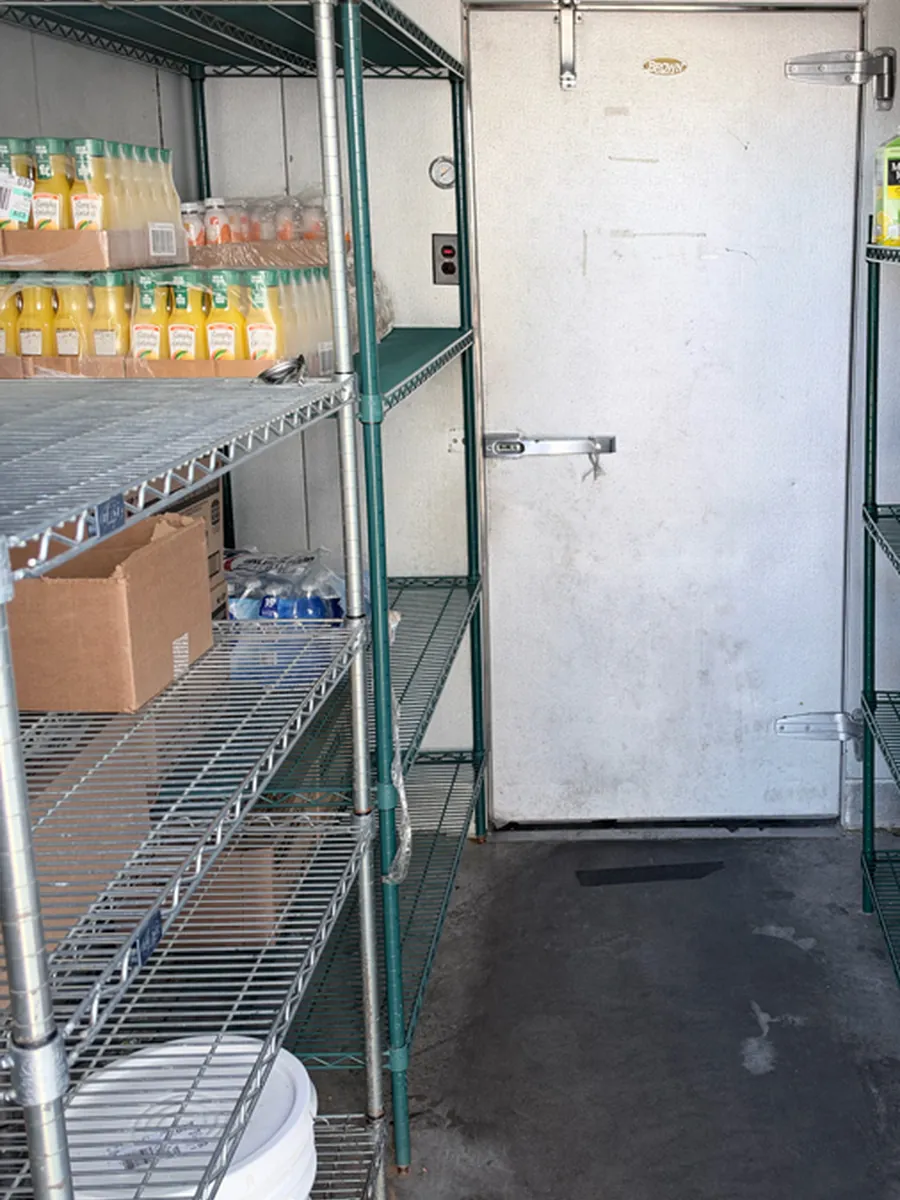
Inside a walk-in freezer at a Commerce City convenience store, shelving and door
The Commerce City store's walk-in freezer.

Commerce City · Convenience store

Walk-in freezer running warm

What we found. The freezer was high-temping and at first the condensing unit was not running at all: there was a fault in its power supply. Once it ran, the condenser coil was dirty, and a pressure test showed moisture inside the refrigeration system.

What we did. Repaired the power supply and secured the connections, cleaned the condensing unit and the evaporator, pressure-tested the system with nitrogen and checked for leaks. Because of the moisture, we evacuated twice with a nitrogen purge in between, pulled a final deep vacuum, confirmed it held, and recharged with new refrigerant.

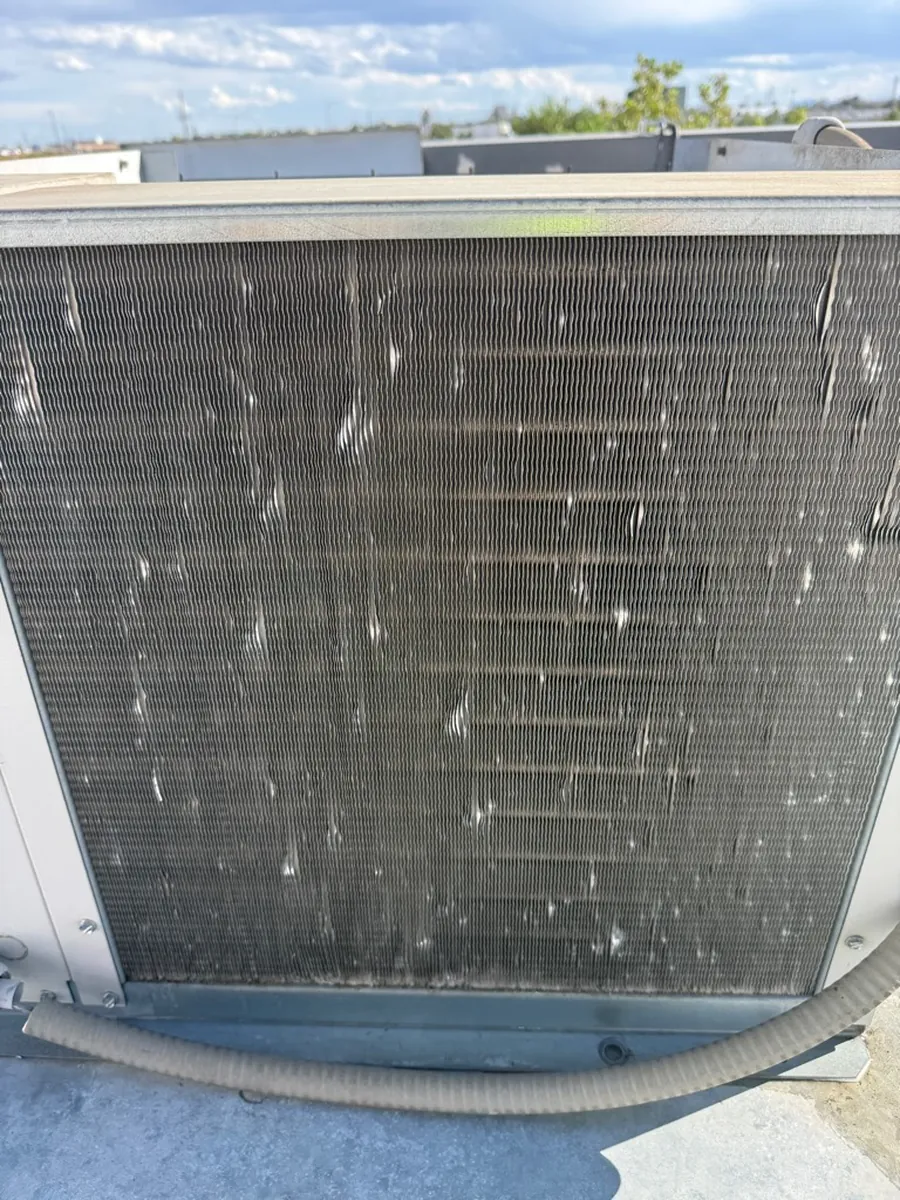
Walk-in cooler condenser coil on a restaurant roof after a deep cleaning
The condenser coil on the roof after cleaning.

Commerce City · Restaurant

Two walk-in coolers that could not keep food cold

What we found. One walk-in had stopped cooling and the other would not hold temperature. Both condenser and evaporator coils were packed with grease, sand and dust, well past normal maintenance level, and some condenser fins were bent flat.

What we did. Took the condensing unit apart, degreased the condenser coil with a foaming coil cleaner, brushed and rinsed it until it ran clear, combed the bent fins straight and cleaned the fan motor and blade. Inside, cleaned the evaporator coil, fan and drain. Then checked pressures, superheat and subcooling, amperage and box pull-down.

Longmont · Community kitchen

Walk-in freezer with a rooftop unit and two failed sensors

What we found. The rooftop condensing unit would not run correctly. A pressure sensor had failed, and after it was replaced the system would not hold a vacuum. A leak search with trace gas and nitrogen found a leak at the second pressure sensor, the cut-out that stops the compressor.

What we did. Recovered the refrigerant, replaced both pressure sensors, leak-checked and charged the system. When pressures showed the evaporator was not being fed, we tested the liquid-line solenoid with a magnet, ruled it out and isolated the remaining fault to the expansion valve, so the owner knew exactly what was left to fix.

How a walk-in works

Where things go wrong

A walk-in is a simple machine with a lot of places to fail. Inside the box, the evaporator pulls heat out of the air: fans blow box air across a cold coil. Outside, the condensing unit pumps that heat away: a compressor raises the refrigerant pressure and a condenser coil and fan reject the heat to the outdoors. Between them run the refrigerant lines, an expansion valve that meters refrigerant into the evaporator, often a liquid-line solenoid valve, and the controls that tie it together.

The evaporator side

Evaporator fan motors run around the clock and wear out. The coil needs airflow and a working defrost to stay clear. Freezers defrost with electric heaters on a schedule; when a heater, the timer or the termination control fails, ice builds until air cannot get through. The drain pan and drain line carry the meltwater out of the box, and on freezers the drain line needs its own heater or it freezes solid.

The condensing side

Condensing units fail mostly because they cannot get rid of heat. A coil packed with grease, dust or cottonwood, a condenser fan that has stopped, or a unit squeezed into a hot corner drives head pressure up, makes the compressor work harder and shortens its life. Contactors, capacitors and pressure controls are the electrical wear items. Compressors are the expensive end of the list, and most compressor failures we see have a cause upstream that has to be fixed at the same time.

The box itself

Doors, gaskets, closers, hinges, strip curtains and heaters are cheap compared to refrigeration parts, but they decide how much work the system has to do. A freezer door that does not seal lets moist air in, the moisture turns into ice on the coil, and the whole system starts to struggle. Panels with damaged insulation, often from forklifts or carts, cause sweating and ice on the outside of the box.

Local conditions

Walk-ins and Denver weather

Most walk-ins in the metro reject heat through condensing units on the roof, and Front Range weather is hard on them. In summer, roofs get hot, coils pull in dust and cottonwood fluff, and hail can flatten fins and damage fan blades. All of that raises head pressure on the hottest days, exactly when the box is working hardest.

Winter brings the opposite problem. Very cold outdoor air can drive head pressure too low for the expansion valve to feed the evaporator properly, especially on systems without effective head pressure control. A walk-in that runs fine in the fall and starts warming up on the coldest January mornings is often telling us about its low-ambient controls, not its compressor.

Snow and ice add their own trouble: drifts that block condenser airflow, ice on fan blades, and condensate lines that freeze where they leave the building. If your condensing unit sits somewhere snow piles up, tell us when you call.

Sealed-system work

Leaks, compressors and refrigerant, done properly

When a walk-in is low on refrigerant, adding more and leaving is not a repair. Refrigerant does not get used up; if it is low, it leaked out. Every sealed-system repair we do follows one procedure:

  1. Find the leak, with electronic detection, bubbles, and trace gas with nitrogen where needed.
  2. Recover the remaining refrigerant and repair the leak or replace the failed component.
  3. Replace the filter-drier whenever the system is opened.
  4. Pressure-test with nitrogen to prove the repair holds.
  5. Pull a deep vacuum and confirm it holds, to remove air and moisture. If moisture got in, we evacuate more than once with a nitrogen purge in between.
  6. Charge by the factory weight, then confirm superheat, subcooling, amperage and box pull-down.

Our technicians are EPA 608 certified for refrigerant handling.

Prevention

Walk-in maintenance that pays for itself

  • Clean the condenser coil at least twice a year, and quarterly near kitchen exhaust or on dusty roofs.
  • Clean the evaporator coil and fan blades, and make sure nothing is stacked in front of the evaporator.
  • Clear the drain pan and line, and check the drain line heater on freezers before winter.
  • Inspect gaskets, closers and hinges. Doors should close and seal on their own.
  • Check door frame heaters and the pressure relief port on freezers.
  • Log box temperatures twice a day. A slow upward trend is the earliest warning you will get.
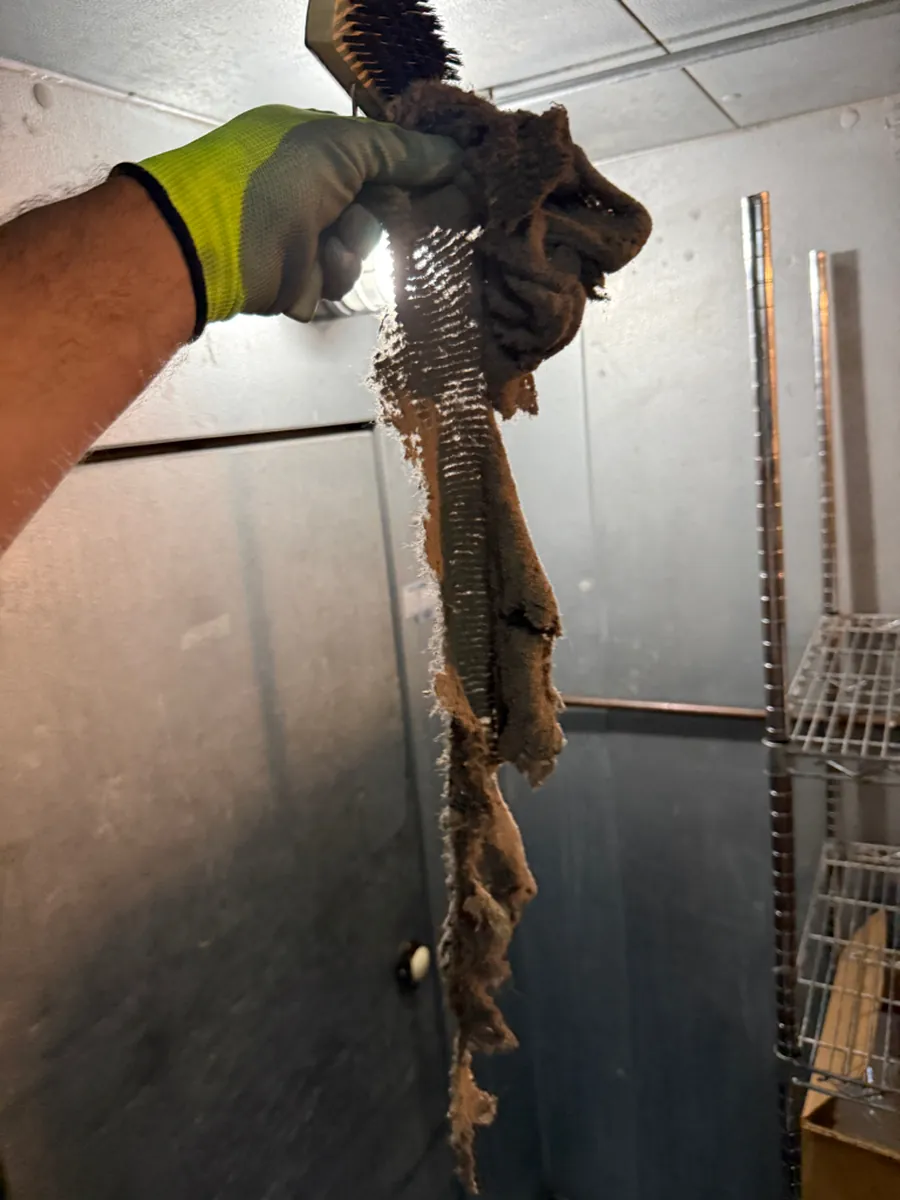
Technician holding a thick mat of dust and debris removed from a walk-in evaporator
Debris pulled out of a walk-in evaporator in Commerce City. This is what blocks airflow.

If you want us to look after your walk-ins on a schedule, tell us when you call. We will set up visits around your hours and keep notes on each unit, so the next visit starts where the last one ended.

Pricing

What a walk-in repair costs

One diagnostic fee, credited toward the repair. The full price in writing before work starts.

Walk-in repairs range from a fan motor or a gasket to a compressor on the roof, so we quote after the diagnosis. When a system is near the end of its life, you get the repair price and our honest take on replacement side by side.

How we price repairs · Warranty

Commercial diagnostic

from $129

Credited toward the repair

FAQ

Walk-in questions

Call (719) 745-8080 with anything not covered here.

My walk-in is warm right now. What should I do while I wait?

Keep the door closed as much as you can, check that nothing is blocking the evaporator fans inside, and move the most sensitive product to a reach-in if you have room. Write down the temperature and the time. Then call us at (719) 745-8080 and tell us what the box is holding.

How much does a walk-in service call cost?

The commercial diagnostic is from $129 and it is credited toward the repair. You get the full repair price in writing before any work starts.

Do you service rooftop condensing units?

Yes. Many walk-ins across the metro have their condensing units on the roof. We service them from the roof, including sealed-system work, and our technicians are EPA 608 certified.

What temperature should my walk-in hold?

Coolers should keep food at 41°F or below, and most kitchens set them in the mid to upper 30s. Freezers are usually set around 0°F or a few degrees below. If yours drifts above that, call before it gets worse.

How often should a walk-in be serviced?

At least twice a year for most kitchens: condenser and evaporator coils cleaned, drains cleared, gaskets and door heaters checked, and the system checked for charge and operation. Kitchens with heavy grease, or units on dusty roofs, benefit from quarterly visits.

Do you work with POs and facility check-in systems?

Yes. We work with purchase orders and can follow the check-in and check-out procedures your facility or service provider requires.

Related

Other commercial equipment we repair

Call now