Skip to content
(719) 745-8080

Commercial · Dish machines

Commercial Dishwasher Repair in Denver

Grizzly Appliance Repair fixes commercial dish machines and the dishwashers in offices, schools and care facilities across the Denver metro: undercounter, door-type and conveyor machines, glass washers and heavy-use built-ins. The commercial diagnostic is from $129, credited toward the repair.

  • From $129diagnostic, credited
  • Quote firstbefore any work
  • Temp & chemicalmachines serviced

Equipment

Dish machines we service

Undercounter dish machines

Bars, cafés, small restaurants and offices. High-temp or chemical-sanitizing, one rack at a time.

Door-type machines

Upright hood machines in restaurant dish rooms, schools, churches and care facilities.

Conveyor machines

Rack conveyors for high-volume kitchens, with multiple tanks, pumps and heaters.

Glass washers

Bar glass washers with their own rinse, chemical and drain issues.

Dishwashers in offices and care facilities

Residential-style built-ins in break rooms, offices and assisted living, which run far more cycles than a home machine.

A dish machine has one job: clean and sanitized

Clean dishes that are not sanitized are an inspection problem. Sanitized dishes that are not clean are a customer problem. A commercial dish machine has to do both, rack after rack, and the two ways it does that fail differently.

High-temperature machines

High-temp machines sanitize with heat. The wash tank holds water in the 150s to 160s, and a booster heater raises the final rinse to around 180°F at the manifold. When the booster element scales up or burns out, or a thermostat or contactor fails, the machine keeps running and dishes still look clean, but they are no longer being sanitized. That is why we check rinse temperature at the manifold on every call, not just the dial.

Low-temperature chemical machines

Chemical machines sanitize with a measured dose of sanitizer in the final rinse. They are simpler on the heating side but depend on pumps, squeeze tubes and pickup lines. A cracked tube or an empty container means no sanitizer, and nothing on the machine looks wrong. Test strips tell the truth.

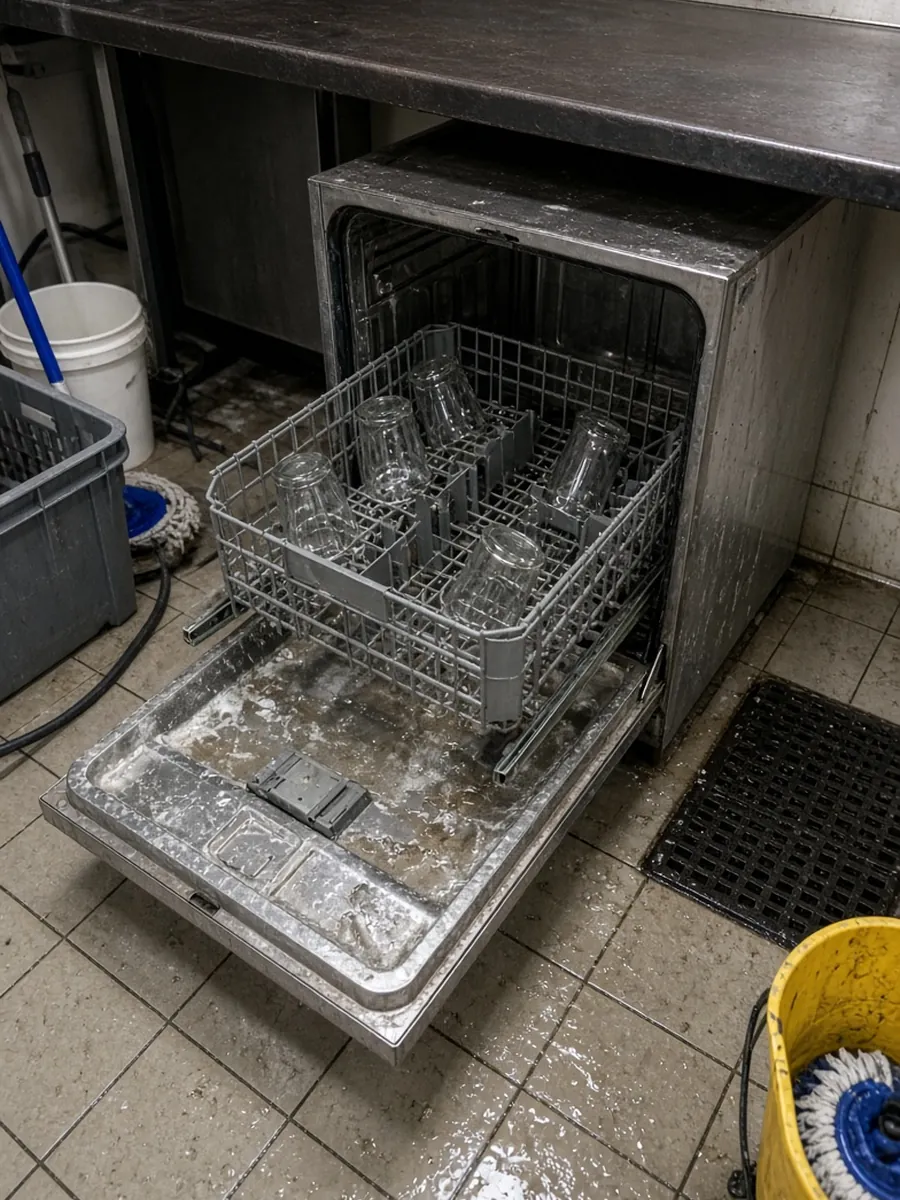
Undercounter commercial dish machine with its door open and a rack of glasses pulled out
Illustration: an undercounter dish machine with a glass rack.

The things both kinds share

Fill valves, level controls, wash pumps, wash and rinse arms, drain pumps or valves, door switches, timers and controls. And scale: wherever water is heated, minerals come out of it and coat heaters, arms and jets. Deliming on schedule prevents a large share of the calls we get.

Symptoms

Common dish machine problems, and how we fix them

Not reaching sanitizing temperature

Usual causes. On high-temp machines the final rinse needs to reach roughly 180°F at the manifold to sanitize. A failed booster heater element, a bad thermostat or contactor, scale on the heater, or incoming water that is too cold will all keep it from getting there.

What we do. We measure rinse temperature at the manifold, test the booster heater, thermostat and contactor, and check the incoming water temperature before replacing anything.

Not sanitizing on a chemical machine

Usual causes. Chemical-sanitizing machines depend on pumps and tubing to deliver sanitizer, detergent and rinse aid. Cracked squeeze tubes, empty or kinked pickup lines and failed pump motors are common.

What we do. We check the chemical pumps and tubing, confirm sanitizer is actually reaching the wash, and test the concentration with strips.

Will not fill, or overfills

Usual causes. A stuck or failed fill solenoid, a clogged inlet strainer, a bad float or level sensor, or low water pressure.

What we do. We check water pressure, the inlet strainer and solenoid, and the level controls, then run fill cycles to confirm the correct level.

Not draining, or water left in the tank

Usual causes. Food debris in the strainer or drain, a failed drain pump on pumped-drain models, a stuck drain valve, or a kinked or clogged drain line.

What we do. We clear the drain path, test the pump or valve, and make sure the drain line falls freely to the floor sink with a proper air gap.

Dirty or spotted dishes

Usual causes. Clogged wash arms or jets, low wash temperature, a weak wash pump, low detergent, scale buildup or overloaded racks.

What we do. We clean the arms and jets, check wash temperature and pump pressure, delime if needed and look at how the machine is being loaded.

Leaking

Usual causes. Worn door gaskets, a cracked hose, a loose clamp, a leaking pump seal or a drain that backs up into the machine.

What we do. We trace the leak to its source and repair the seal, hose or drain that is causing it.

Will not start or stops mid-cycle

Usual causes. Door switches, a failed timer or control board, a tripped high-limit, or an overloaded motor.

What we do. We read any codes, check door switches and safeties, and test the controls and motor before replacing parts.
From our job log

Dishwasher jobs at local businesses

Recent calls from offices and care facilities, written from our technicians' notes.

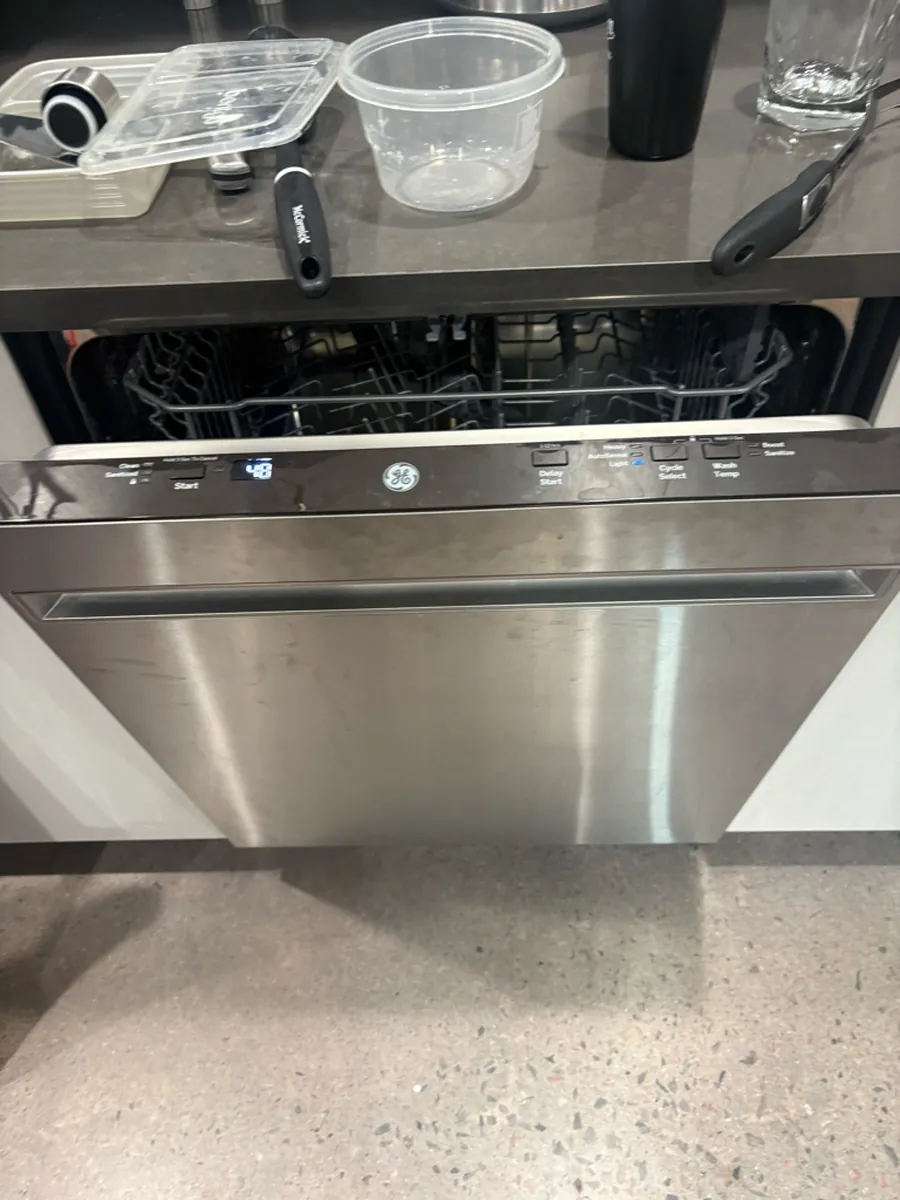
Built-in dishwasher with the door open in a Centennial business office kitchen
The Centennial office dishwasher after the drain pump replacement.

Centennial · Office

Two-year-old office dishwasher that would not drain

What we found. The office dishwasher had barely been used, but it would not drain and showed an error code on the panel. The drain pump had failed.

What we did. Replaced the drain pump, cleared the code and ran a full cycle to confirm it pumped out completely.

Arvada · Assisted living

Dishwasher service at an assisted living facility

What we found. The dishwasher filter was packed with food debris, which restricts the water reaching the wash pump and slows draining.

What we did. Cleaned the filter and the sump, then ran and checked each cycle to confirm wash, drain and dry were working properly.

Daily care

What your dish crew can do every day

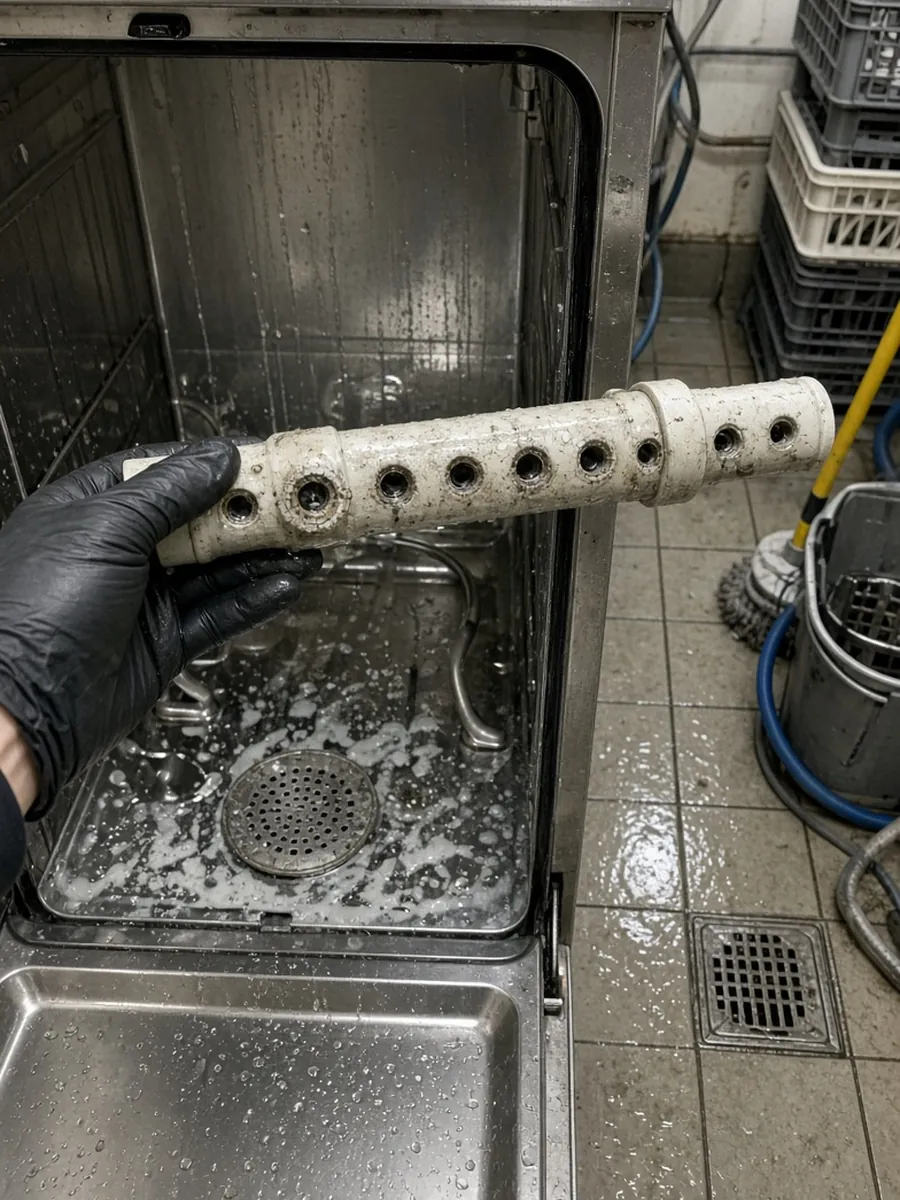
Gloved hand holding a removed dish machine wash arm with scale-clogged spray holes
Illustration: a wash arm with clogged jets, pulled for cleaning.
  • Scrap and pre-rinse before racking. Food in the wash tank clogs strainers, arms and pumps.
  • Pull and clean the strainers and scrap baskets after every meal period.
  • Remove and rinse the wash and rinse arms at the end of the day, and clear any blocked jets.
  • Drain, clean and refill the tank as often as the manufacturer recommends, at least daily.
  • Check rinse temperature or sanitizer level every shift and log it.
  • Delime on schedule using the machine manufacturer's or chemical supplier's procedure.
  • Leave the door open overnight so the machine can dry out.

Office and care-facility dishwashers

Many businesses run residential-style dishwashers in break rooms, staff kitchens and assisted living units. They are built for one household and end up washing for a whole office or a floor of residents, often several cycles a day. Filters clog faster, drain pumps work harder and door latches and gaskets wear sooner. We treat them as commercial calls: the same diagnostic, the same written quote, and repairs aimed at keeping them running under that heavier use.

Inspections

What inspectors look at on a dish machine

Health inspectors usually check a few specific things at the dish machine, and most of them are easy to keep in order once you know them:

  • Sanitizing proof. A recent rinse temperature log for high-temp machines, or sanitizer test strips and a log for chemical machines. Many inspectors run a temperature label or a strip themselves.
  • Gauges that work. Wash and rinse temperature gauges and, on many machines, a rinse pressure gauge. A gauge stuck at zero is an easy write-up.
  • The data plate. Operators should know the machine's required temperatures or sanitizer concentration, which are listed on the plate.
  • Cleanliness inside. Scale, slime and food buildup in the tank, on the arms or around the door.
  • The drain. An indirect connection to a floor sink with an air gap, not a hard-piped drain.

If your machine is drifting on temperature or sanitizer before an inspection window, call us. It is far easier to fix a booster heater on a Tuesday than to explain a failing rinse temperature on inspection day.

Water and scale in the Denver metro

Water across the metro comes from different providers and sources, and its mineral content varies by neighborhood and by season. Any machine that heats water will eventually build scale on its heater elements, in the booster tank and in the tiny rinse jets. Scale insulates the heater, so it works harder and fails sooner, and it narrows the jets until the rinse pattern breaks up. A water softener or treatment system on the machine's supply and a deliming schedule that fits your water are the two best investments you can make in a dish machine.

Repair or replace

When a dish machine is worth fixing

Most dish machine parts are designed to be replaced: heater elements, thermostats, contactors, solenoid valves, pumps, motors, switches, timers, arms and seals. A ten-year-old machine with a failed booster element is almost always worth repairing. The harder calls are a tank that has corroded through, a wash motor and a control board failing at the same time on an older unit, or a machine that is simply too small for how many covers you serve now. In those cases we give you the repair price and our honest read on replacement, and we can tell you which features matter for your volume.

For residential-style dishwashers in offices and care facilities, the math is simpler: pumps, valves, latches and boards are reasonable repairs on a machine a few years old, while a leaking tub or repeated failures on an older budget model usually point to replacement.

Pricing

What a dish machine repair costs

One diagnostic fee, credited toward the repair. The full price in writing before work starts.

Most dish machine repairs are heaters, thermostats, valves, pumps, switches and seals. We quote after the diagnosis, and if a machine is past saving we will say so.

How we price repairs · Warranty

Commercial diagnostic

from $129

Credited toward the repair

FAQ

Commercial dishwasher questions

Call (719) 745-8080 with anything not covered here.

How much does a commercial dishwasher service call cost?

The commercial diagnostic is from $129, credited toward the repair. You get the full repair price in writing before any work starts.

What temperature does a high-temp dish machine need?

The final sanitizing rinse should reach about 180°F at the rinse manifold on most high-temp machines (a little lower on some single-tank stationary-rack models). Wash tanks run cooler, usually in the 150s to 160s. Your machine's data plate lists the exact numbers.

How often should a dish machine be delimed?

It depends on your water and how much the machine runs. Many kitchens delime monthly; machines on harder water or running all day may need it weekly. Scale on the heater and in the arms is the most common cause of temperature and wash problems we see.

Do you repair dishwashers in offices and care facilities?

Yes. Break-room and care-facility dishwashers often run several cycles a day, much more than in a home. We repair them like any other commercial call.

Do you work with chemical suppliers?

Chemical companies usually own and service their dispensing pumps. We repair the machine itself, and if the problem is in the supplier's equipment we will tell you so you can call them.

Related

Other commercial equipment we repair

Call now