Skip to content
(719) 745-8080

Commercial

Commercial Appliance Repair in Denver

Grizzly Appliance Repair services commercial kitchen, bar and laundry equipment across the Denver metro: walk-in coolers and freezers, reach-ins and prep tables, ice machines, dish machines, ovens and ranges, and commercial washers and dryers. The commercial diagnostic is from $129, credited toward the repair.

  • From $129diagnostic, credited
  • Quote firstbefore any work
  • EPA 608refrigerant certified
  • POs welcomefacility check-in OK

Who we work for

Businesses we keep running

Restaurants & cafés

Walk-ins, reach-ins, prep tables, ice machines, dish machines, ovens and ranges.

Bars & breweries

Undercounter coolers, back-bar refrigeration, ice machines and glass washers.

Schools, churches & nonprofits

Kitchens that run on a schedule and need the equipment ready when they do.

Hotels & senior living

Ice machines on every floor, kitchen refrigeration and on-premise laundry.

Gyms, salons & studios

Commercial washers and dryers that run all day, every day.

Property managers

Multifamily laundry rooms and the commercial tenants in your buildings.

Convenience stores

Merchandisers, beverage coolers and walk-ins behind the glass.

Facility service companies

We work with purchase orders and check-in and check-out systems.

Commercial repair is a different job

A home refrigerator that runs warm is an inconvenience. A walk-in that runs warm on a Friday afternoon is product in the trash, a menu that shrinks by dinner and, if an inspector walks in, a write-up. Commercial equipment also works harder: doors open hundreds of times a day, condensers sit next to cook lines or on hot roofs, and ice machines and dish machines run on whatever water the building gets.

That changes how we work. We start from what the equipment is telling us: box and product temperatures, pressures, amperage, cycle times, what the control board has logged. Then we find the cause, not only the failed part. A compressor that died because the condenser was packed with grease will die again if nobody cleans the condenser.

Refrigeration, start to finish

Most of our commercial calls are refrigeration: walk-in coolers and freezers, reach-ins, prep tables, merchandisers and bar coolers. We handle the whole system: evaporator fans and defrost, door heaters and gaskets, drains, thermostats and controllers, condensing units on the roof or behind the building, and sealed-system work. Refrigerant repairs follow one procedure: find the leak, pressure-test with nitrogen, pull a vacuum and charge by the factory weight.

Ice, dishes, cooking and laundry

Ice machines are usually a water problem first: scale, slime, a valve or a sensor. Dish machines fail on temperature, fill, wash arms and chemical feed. Ovens and ranges come down to ignition, gas valves, thermostats, thermocouples and fans. Commercial washers and dryers wear out belts, bearings, pulleys, door locks, pumps and heating systems. We know the failure patterns on each and plan the visit around them.
In depth

What usually fails, by equipment type

Walk-in coolers and freezers

The box warms up while the unit runs. Common causes are an iced evaporator from failed defrost heaters, a defrost timer or controller fault, a frozen drain line, evaporator fan motors that have stopped, door heaters and gaskets on freezers, and on the condensing side dirty coils, failed condenser fans, contactors, pressure controls and compressors. Freezers add one more: a door that does not seal lets in moisture that turns straight into ice on the coil.

Reach-ins, prep tables and bar coolers

These live in the hottest part of the kitchen, so most failures start at the condenser: dust, flour and grease cut the coil's ability to reject heat, the compressor works harder and eventually fails. Prep tables also lose temperature at the rail when the lid is left open or the rail fan stops. Gaskets, door hinges, thermostats, evaporator fans and drain heaters complete the list.

Ice machines

Scale and slime cause most problems: thin cubes, long harvests, sensors that misread and machines that shut themselves down. Then come water inlet valves, water pumps, float switches, thickness probes, harvest sensors, condenser fans and, less often, sealed-system parts such as pressure controls and compressors.

Dish machines

High-temperature machines miss their final rinse temperature when booster heaters, thermostats or contactors fail. Chemical machines stop sanitizing when pumps or tubing fail. Both kinds suffer from scale in wash arms and heaters, fill valves that stick, drain valves and pumps that clog, and door switches that keep the machine from starting.

Ovens and ranges

Gas equipment fails on ignition: pilots that will not stay lit, thermocouples and flame sensors, igniters and gas valves. Convection ovens add blower motors and door switches, and all ovens can drift when thermostats or temperature probes age. Ranges wear out burner valves and pilots. We do not service fryers or grills.

Commercial laundry

On-premise washers and dryers run many more cycles than home machines. Washers wear out door locks, drain pumps, bearings and motor drives. Dryers wear out belts, idler pulleys, drum rollers and bearings, and lose heat when igniters, gas valve coils, heating elements or high-limit thermostats fail, often because the exhaust is restricted.

Warning signs

Call before it fails completely

Most commercial breakdowns give a warning first. These are the ones worth a call while the equipment is still running.

Temperatures drifting up

Cold-held food has to stay at 41°F or below. A reach-in or walk-in that creeps to 43–45°F in the afternoon is telling you the system is losing capacity. Catch it then, not when product goes in the trash.

Frost or ice on the evaporator

A blanket of ice on the coil in a walk-in means defrost is not working, a door is not sealing or the drain is frozen. Airflow stops, and the box warms up while the unit runs non-stop.

The compressor never shuts off, or short-cycles

Continuous running points to a dirty condenser, low charge or a load the system cannot keep up with. On-off-on every few minutes points to controls, pressure switches or an electrical fault.

Water where it should not be

Puddles under a reach-in, ice in a walk-in floor drain line or water around a dish machine are early warnings of drain, gasket or valve problems.

Dish machine not hitting temperature

High-temp machines need a final rinse around 180°F to sanitize. If the booster cannot get there, or chemical machines are not pumping sanitizer, dishes may look clean without being sanitized.

New noises

Squealing belts, grinding fan bearings, a rattling condenser fan or a compressor that knocks on start. Noise usually comes before failure.

From our job log

Commercial jobs from around the metro

Recent commercial calls, written from our technicians' notes. Photos are from the jobs themselves.

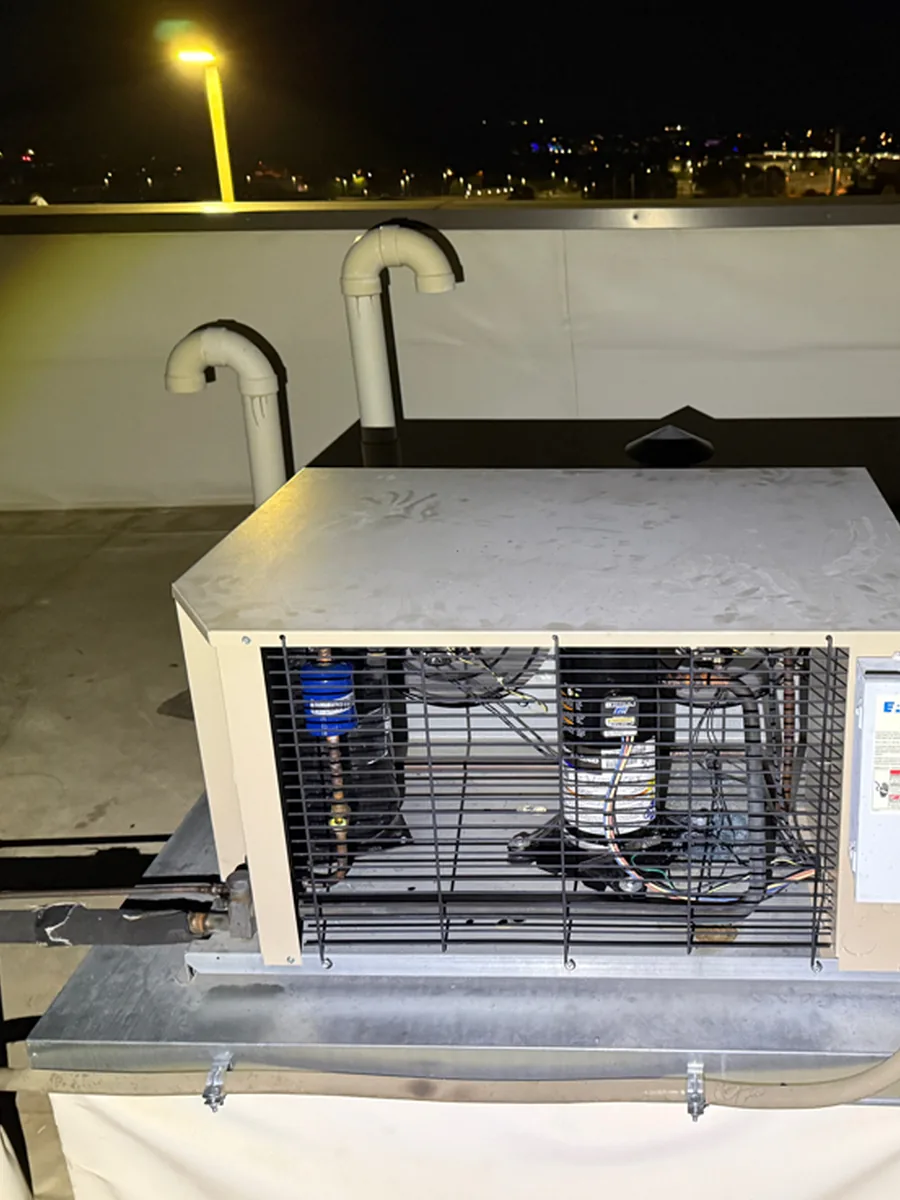
Rooftop condensing unit for a walk-in cooler at an Aurora café
The café's rooftop condensing unit in Aurora after the compressor replacement.

Aurora · Café

Walk-in cooler losing temperature, food at risk

What we found. The walk-in was not cooling and product was starting to spoil. On the roof, the condensing unit's compressor had failed.

What we did. Recovered the refrigerant, removed the failed compressor and installed a new one, replaced the liquid-line filter-drier, pulled a deep vacuum, charged the system and checked operating pressures and box temperature before leaving.

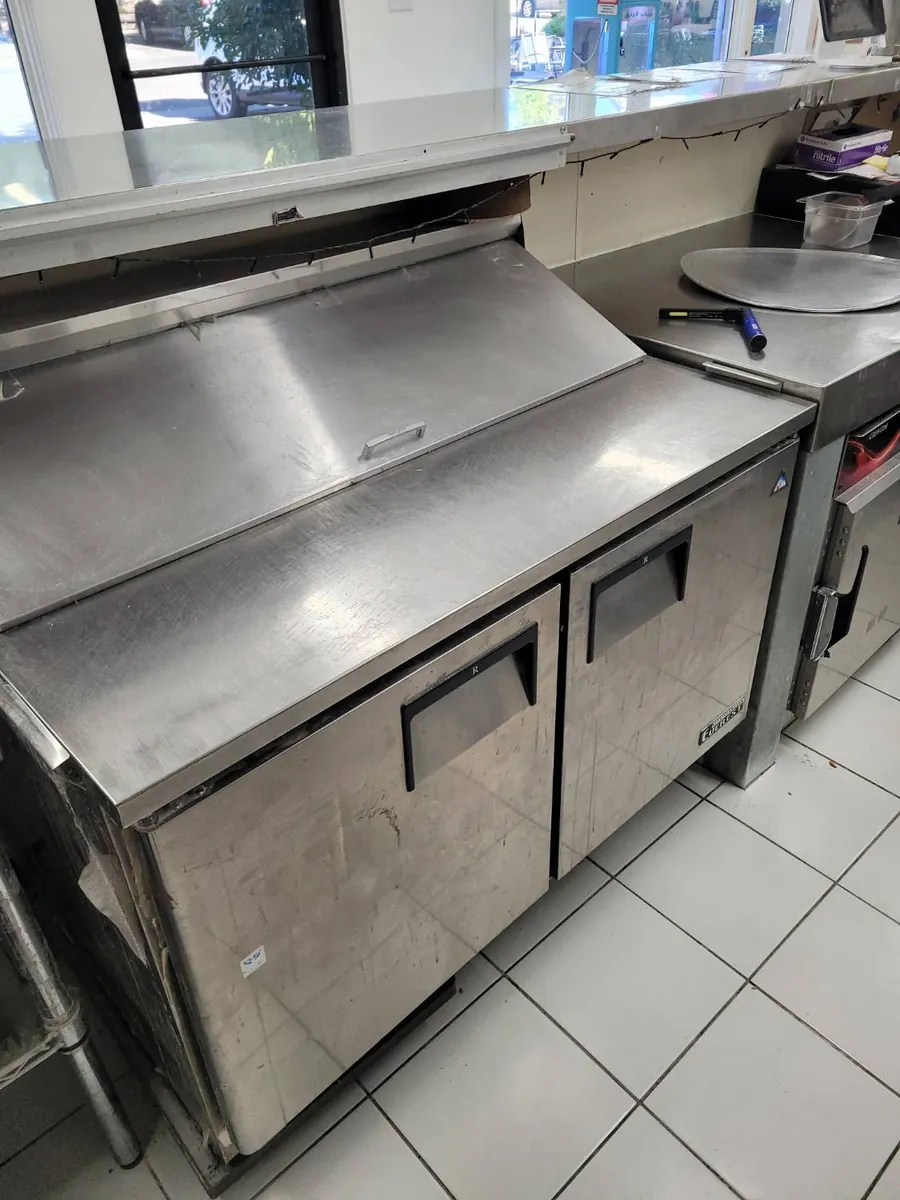
Two-door stainless sandwich prep table refrigerator in a Niwot kitchen
The two-door sandwich prep table in Niwot after coil cleaning.

Niwot

Sandwich prep table running warm

What we found. The prep table was not holding temperature in the rail. Both the condenser coil and the evaporator coil were loaded with dust and grime, so the system could not move heat.

What we did. Diagnosed the unit, cleaned the condenser and evaporator coils and tested it until the rail and the cabinet were holding temperature again.

Longmont · Restaurant

Tandoor oven that would not stay lit

What we found. The gas tandoor would not keep its burner going. The fault was in the thermocouple circuit, which tells the gas valve a flame is present.

What we did. Diagnosed the thermocouple problem and got the burner lighting and staying lit so the kitchen could fire the oven for service.

Denver · Studio laundry

Commercial dryer not drying

What we found. The dryer in a busy studio's laundry was running without drying loads. The drum drive was worn: the idler pulley and the belt had failed.

What we did. Replaced the idler pulley and the drive belt and ran the dryer through a full cycle to confirm the drum turned and heated properly.

How it works

A commercial service call with Grizzly

  1. Call or book. Tell us the business, the equipment, what it is doing and, for refrigeration, what temperature it is holding. If your company uses a PO number or a check-in system, give us the details up front.
  2. Priority by risk. Food at risk and equipment that stops service go to the front of the line whenever we can manage it.
  3. Diagnosis with readings. The technician measures before replacing anything: temperatures, pressures, amperage, cycle times. You hear what failed and why.
  4. Written quote. The full repair price before any work starts, with the diagnostic fee credited. If the repair is not worth it, we will say so.
  5. Repair and verify. We fix it, run the equipment through its cycle and confirm it holds temperature or production before we leave. If a part has to be ordered, we tell you the timing and what to do meanwhile.

Local conditions

What Denver does to commercial equipment

Rooftop condensing units take a beating

Many walk-ins across the metro reject heat through condensing units on the roof. Summer sun and hot roof membranes push head pressures up, hail can damage condenser fins and fan blades, and cottonwood fluff and dust plug coils every spring. In winter the opposite problem shows up: very cold air can drive head pressure too low for the system to feed the evaporator properly. A unit that runs fine in October and struggles in January, or the other way around, is telling you something about its controls.

Water shapes ice machines and dish machines

Water across the metro comes from different providers and sources, and its mineral content varies. Minerals end up as scale on ice machine evaporators and inside dish machine boosters and wash arms. Filtration, regular descaling and deliming keep those machines making ice and hitting temperature.

Altitude and gas cooking equipment

At a mile high there is less oxygen in the air. Gas ovens, ranges and other cooking equipment set up for sea level can burn rich, soot up and heat slowly. When we work on gas equipment we look at the flame and the setup, not only the failed part.

Prevention

Simple maintenance that prevents most emergency calls

  • Clean condenser coils on reach-ins, prep tables and ice machines every few months, more often near fryers and griddles. A clogged coil is the most common root cause of refrigeration failures we see.
  • Check door gaskets and closers on walk-ins and reach-ins. A torn gasket or a door that does not close on its own lets warm, moist air in and loads the evaporator with ice.
  • Keep drains clear. Walk-in, reach-in, ice machine and dish machine drains clog with slime and food debris and cause leaks and freeze-ups.
  • Clean and sanitize ice machines at least twice a year, and replace water filters on schedule.
  • Delime dish machines as often as your water calls for, and watch final rinse temperatures or sanitizer levels daily.
  • Clean lint from commercial dryers every shift, and have the full exhaust run cleaned regularly.

If you would like us to check several units on a regular schedule, ask when you call and we will set up a visit plan around your hours.

Pricing

What commercial repair costs

One diagnostic fee, credited toward the repair. The full price in writing before work starts.

Commercial repairs range from a fan motor or a gasket to a compressor on the roof, so we quote after the diagnosis rather than guessing on the phone. When a unit is near the end of its life, you get the repair price and our honest take on replacement side by side.

How we price repairs · Warranty

Commercial diagnostic

from $129

Credited toward the repair

Repair or replace

When repair makes sense, and when it does not

Commercial equipment is built to be repaired. Fans, controls, valves, gaskets, heaters, switches, pumps and belts are all routine repairs at almost any age, and they cost a fraction of a new unit. The harder calls are compressor or sealed-system failures on older, inexpensive reach-ins, rusted-through cabinets and evaporators, and equipment that is simply too small for the business. In those cases we give you the repair number and tell you plainly whether we would spend it.

FAQ

Commercial repair questions

Call (719) 745-8080 with anything not covered here.

How fast can you get to a restaurant with a down walk-in?

When food is at risk we try to be there the same day or the next morning. Tell us it is a commercial call and what temperature the box is holding, and we will set the priority accordingly.

What does a commercial service call cost?

The commercial diagnostic is from $129, and it is credited toward the repair. You get the full repair price in writing before any work starts.

Do you work with POs and facility management companies?

Yes. We work with purchase orders and can follow check-in and check-out procedures required by your facility or service provider.

Do you repair fryers and grills?

No. We service commercial refrigeration, ice machines, dish machines, ovens and ranges, and laundry equipment. We do not work on fryers or grills, and we would rather tell you that than send someone who cannot fix it.

Do you work on rooftop condensing units?

Yes. Many walk-ins and some reach-ins in the metro have their condensing units on the roof. We service them from the roof, and our technicians are EPA 608 certified for refrigerant work.

Can you look at more than one unit on the same visit?

Yes, and it usually saves you money. If the walk-in, the ice machine and the dish machine all need attention, tell us when you book so we plan the time and bring the right parts.

Which brands do you service?

Commercial brands we see often include True, Turbo Air, Everest, Hoshizaki, Manitowoc, Scotsman, Hobart, Jackson, Rational, Vulcan, Garland, Speed Queen, UniMac and Dexter. We are independent and not a factory-authorized servicer.

Call now